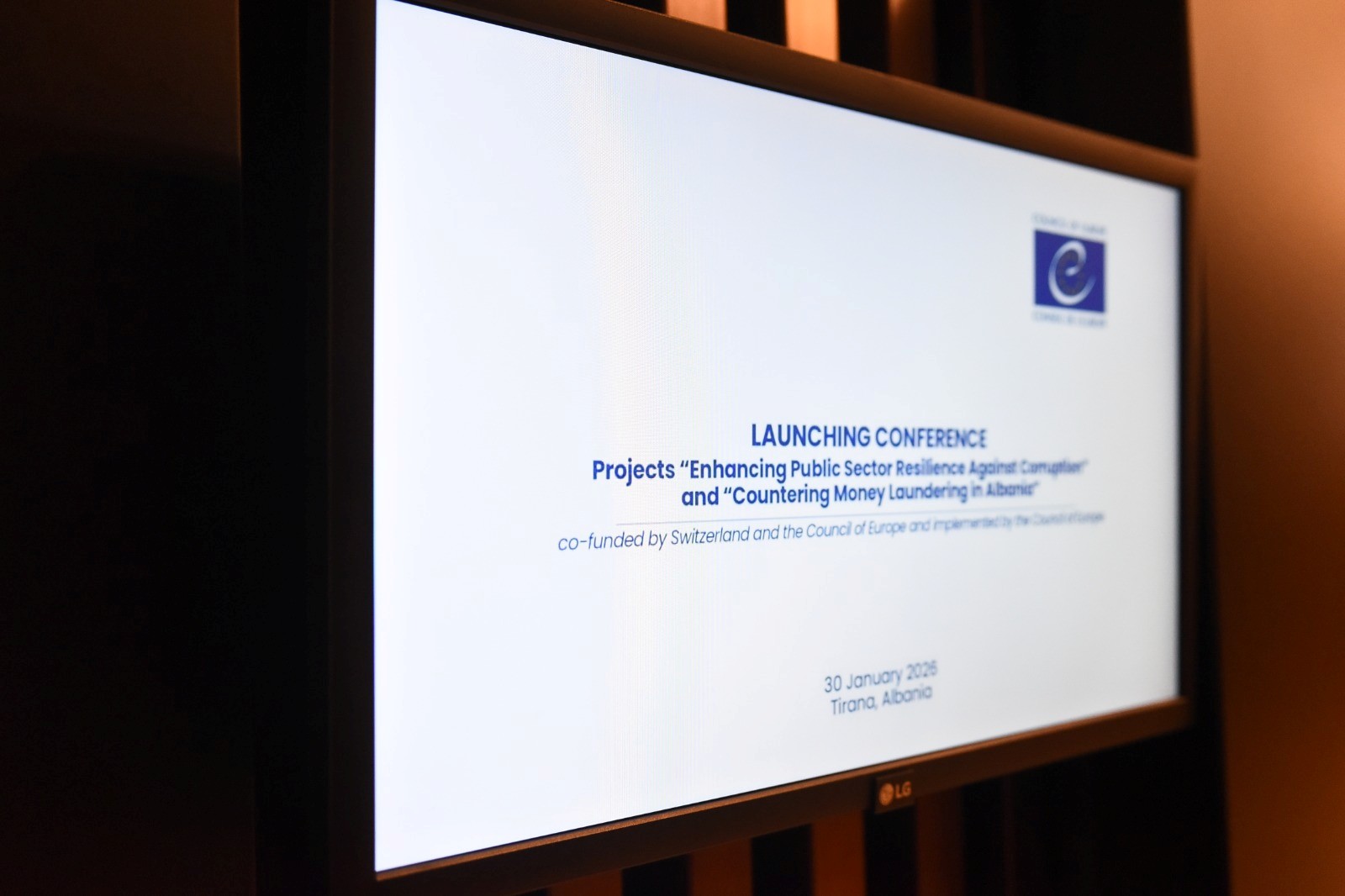
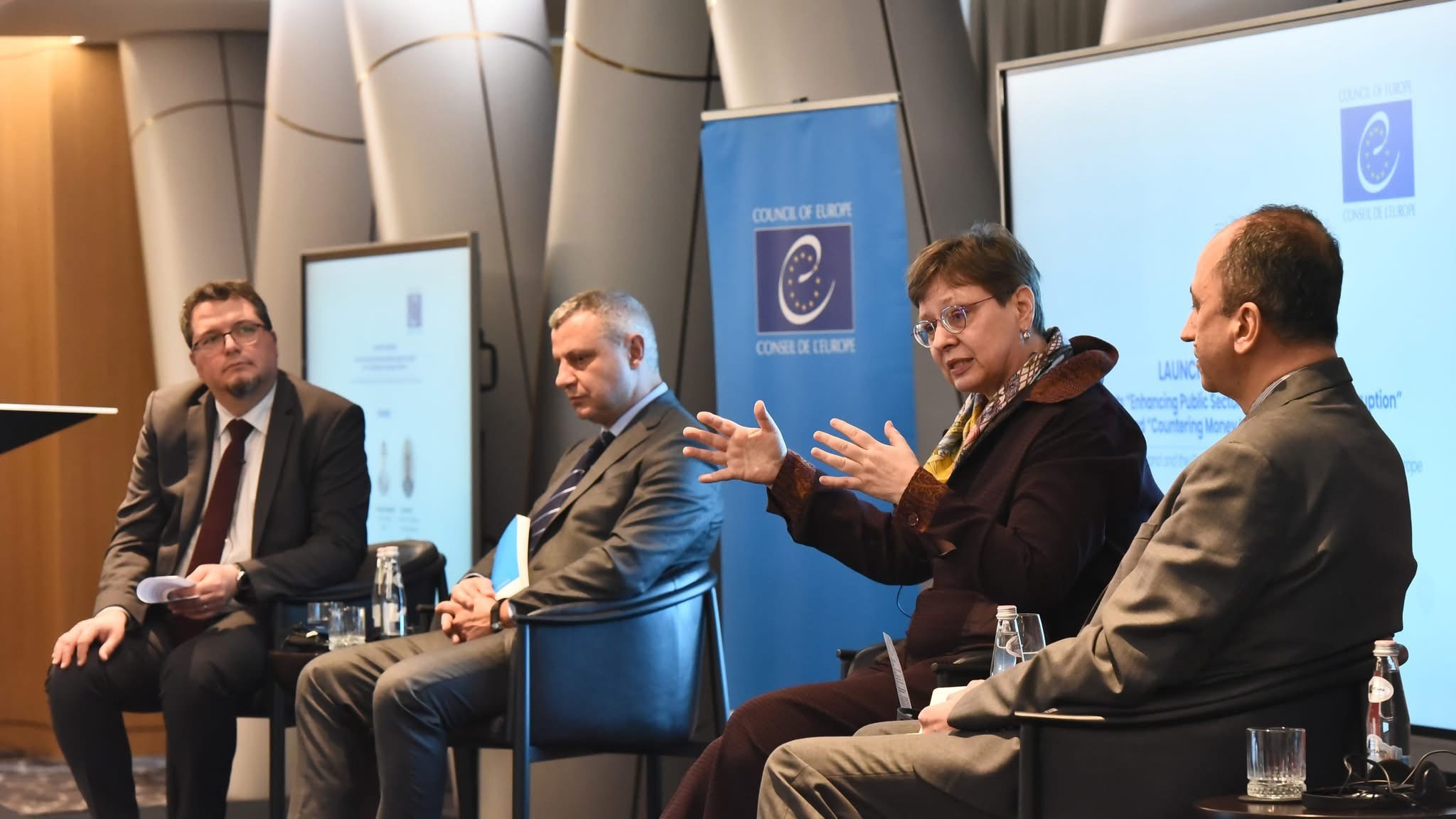
Within the framework of the conference presenting two important projects implemented by the Council of Europe, a thematic session dedicated to issues related to the prevention of money laundering, terrorist financing, and proliferation of weapons of mass destruction (AML/CFT/CPF) was held, with the aim of exchanging experiences and discussing the latest developments in this field.
The project “Countering Money Laundering in Albania” aims to support the Albanian authorities in strengthening the prevention of and fight against money laundering and terrorist financing through a risk-based approach, by enhancing financial intelligence, supervision, and the capacities of law enforcement agencies, as well as by providing support to private sector entities. The Financial Intelligence Agency (FIA) will be one of the key institutions involved in the implementation of this project.
In this context, one of the conference sessions was dedicated to the prevention of money laundering, terrorist financing, and proliferation financing (AML/CFT/CPF), with the participation of experts from the Council of Europe and the Financial Intelligence Agency, namely Mr. Evgeni Evgeniev, Head of Division at the Council of Europe; Mr. Giuseppe Lombardo and Ms. Elisabeth Florkowski, Council of Europe experts; and Mr. Agim Muslia, expert of the Financial Intelligence Agency.
During this session, the experts exchanged experiences and good practices regarding developments in international AML/CFT standards and their impact on national frameworks, as well as on the risk-based supervisory approach for businesses and designated non-financial businesses and professions (DNFBPs), focusing on expectations and the most advanced practices in this area.
In this regard, the representative of the Financial Intelligence Agency presented the main practical challenges and opportunities for improvement in the supervision of liberal professions, emphasizing the importance of strengthening institutional capacities, improving data quality, aligning preventive measures with identified risks, and enhancing inter-institutional cooperation in support of an effective risk-based approach.